
Short answer: The seven churches of Revelation were real first-century Christian communities in western Asia Minor, in modern-day Türkiye. They are Ephesus, Smyrna, Pergamum, Thyatira, Sardis, Philadelphia, and Laodicea. Revelation 2–3 addresses each church with a distinct message about faithfulness, repentance, endurance, witness, and hope.
Where are the seven churches of Revelation?
The churches are not seven locations in a single archaeological park. They form a historic route through western Türkiye, beginning near the Aegean coast and moving inland. Their modern place names help visitors understand how the ancient communities fit into the geography of the Roman province of Asia.
- Ephesus — near Selçuk and İzmir: Revelation 2:1–7 praises the church’s endurance but warns that it has abandoned its first love. Ephesus was a major port and urban centre.
- Smyrna — modern İzmir: Revelation 2:8–11 speaks to a church facing suffering and poverty, promising the crown of life to those who remain faithful.
- Pergamum — modern Bergama: Revelation 2:12–17 describes a community living where opposing religious and political pressures were strongly felt.
- Thyatira — modern Akhisar: Revelation 2:18–29 commends love, faith, service, and perseverance while challenging the church to resist corrupt teaching.
- Sardis — near Sart and Salihli: Revelation 3:1–6 warns a church with a reputation for being alive but calls it to wake up and strengthen what remains.
- Philadelphia — modern Alaşehir: Revelation 3:7–13 encourages a small but faithful church that has kept Christ’s word and endured patiently.
- Laodicea — near Denizli and Pamukkale: Revelation 3:14–22 confronts spiritual complacency and the church’s lukewarm self-understanding.
What is the message of the seven churches?
Revelation’s letters are addressed to specific congregations, but they also invite every generation of Christians to examine its own life. The messages include both affirmation and correction. Some churches are praised for endurance; others are challenged about compromise, spiritual sleep, false teaching, or self-sufficiency.
A useful reading method is to ask four questions for every church:
- What does Jesus know about this community?
- What does he commend or challenge?
- What response is required?
- What promise is given to those who overcome?
Why the archaeological setting matters
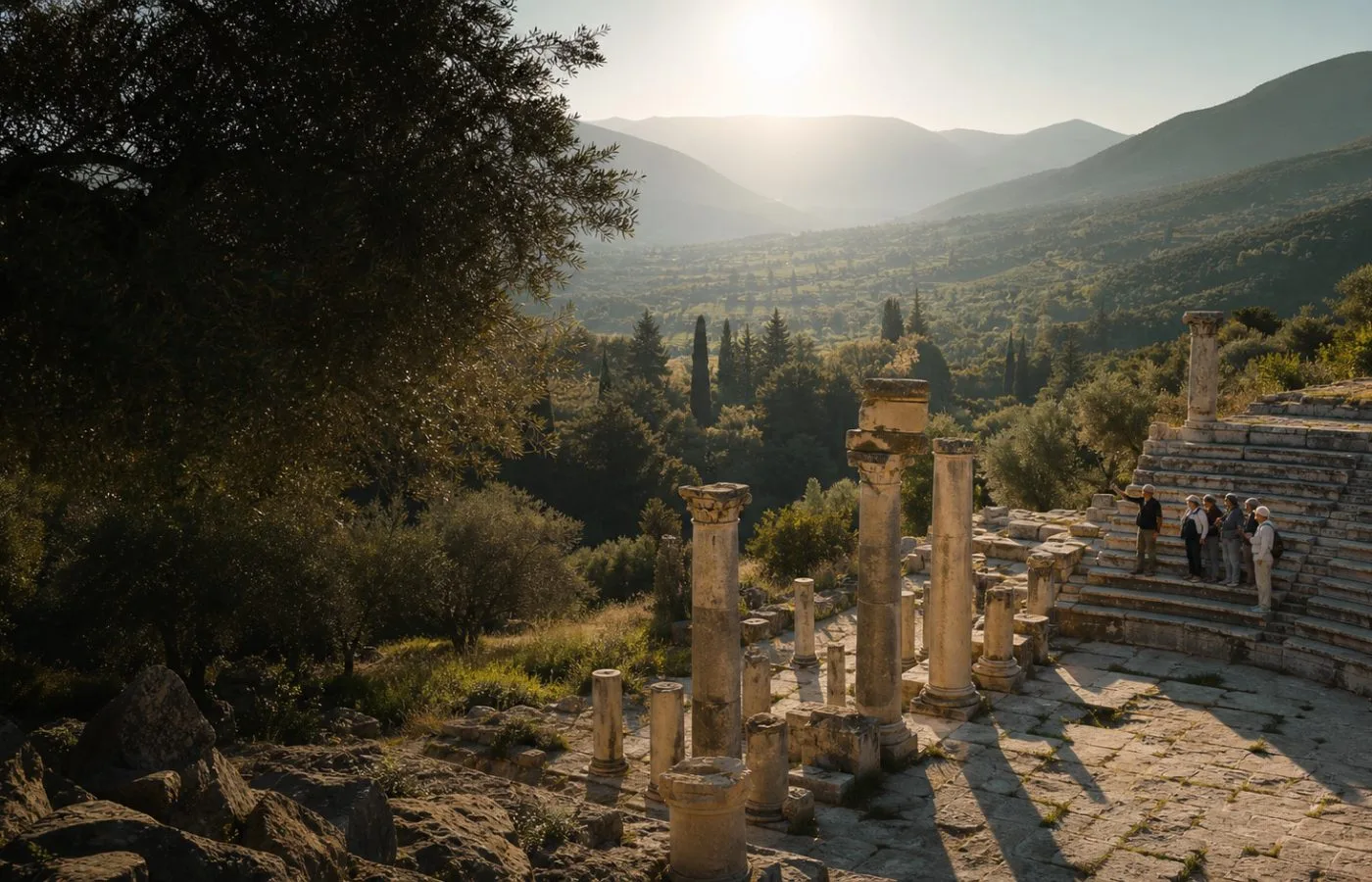
The ruins do not replace the Biblical text; they give the text a physical setting. Ephesus helps visitors imagine a large urban environment. Pergamum reveals a dramatic hilltop centre. Sardis shows the remains of a once-powerful Lydian and Roman city. Laodicea’s location near major routes helps explain why trade, wealth, and civic identity form part of the background.
Archaeology should be handled carefully. Not every modern landmark can be identified with certainty, and some ancient structures have been reconstructed or interpreted differently over time. A good study tour combines the text of Revelation with responsible historical and archaeological explanation.
Planning a seven churches tour
A seven churches itinerary often combines Istanbul or İzmir with Ephesus, Smyrna, Pergamum, Thyatira, Sardis, Philadelphia, and Laodicea. The exact order depends on arrival airport, hotel locations, road conditions, opening hours, and whether the group adds sites such as Priene, Miletus, Didyma, or Pamukkale.
Our earlier tour information described an eight-day, seven-night route with Istanbul and the seven church sites. That is a planning reference rather than a fixed promise: dates, hotels, transport, guide availability, and group pace should be confirmed in a current written proposal.
See the current Seven Churches route or request a group itinerary.
Frequently asked questions
What are the seven churches of Revelation?
They are Ephesus, Smyrna, Pergamum, Thyatira, Sardis, Philadelphia, and Laodicea, the seven churches addressed in Revelation 2–3.
Are the seven churches in modern Turkey?
Yes. All seven ancient sites are located in western Türkiye, although some ancient city names correspond to modern towns or archaeological areas rather than one-to-one city boundaries.
How long does a seven churches tour take?
There is no single required duration. A focused route may take about a week, while groups that add Istanbul, teaching sessions, rest time, or extra archaeological sites may need longer.
Can a group visit all seven sites?
Yes, but the route requires thoughtful driving and pacing. A local operator can coordinate hotels, professional transport, site timing, and a guide around the group’s size and priorities.
Key references
Read Revelation 1:9–20 for the setting of the vision, then Revelation 2:1–29 and 3:1–22 for the seven letters. Acts 19 provides important background for the early Christian community in Ephesus.